November 15th, 2026
New cabling fixes only the physical layer, not aging access points or firewalls. Learn how WiFi and firewall hardware cap speed, security, and network life.
Read Full Story »
Posted in: Network Cabling
November 1st, 2026
Build a security awareness program that works: the topics worth teaching, a training cadence employees will keep, and the metrics that prove behavior changed.
Read Full Story »
Posted in: Cybersecurity
October 15th, 2026
A practical framework for modeling AI costs and benefits: full cost categories, measurable returns, pilot design, and the math behind a go or no-go decision.
Read Full Story »
Posted in: AI
October 14th, 2026
ATS launches an AI workflow automation tool that lets SMB teams design repeatable processes, cut hours of repetitive back-office work, and keep human oversight.
Read Full Story »
October 1st, 2026
Converge video surveillance and access control on one platform: verified entry, faster investigations, and a camera network that stays secure and compliant.
Read Full Story »
Posted in: Cybersecurity
September 16th, 2026
Leading MTSP explains its new AI receptionist for business phone systems: answer every call, route callers correctly, and free staff for higher-value work.
Read Full Story »
September 15th, 2026
Understanding AI Contact Agents and Their Growing Role. Businesses face mounting pressure to deliver exceptional customer service while managing operational
Read Full Story »
Posted in: AI
September 1st, 2026
The Password Problem: Why It's Time to Move On. After decades of relying on passwords to secure everything from email accounts to banking systems, we're finally
Read Full Story »
Posted in: Cybersecurity
August 21st, 2026
Leading MTSP Explains New Secure AI Platform for SMBs. CONCORD, CA - ATS, a leading managed technology services provider (MTSP), announced today that the compan
Read Full Story »
August 15th, 2026
Understanding Modern Business Phone Systems. The traditional desk phone connected to copper wiring has given way to sophisticated communication platforms that
Read Full Story »
Posted in: IT Support
August 14th, 2026
The Growing Threat of Account Compromises. Account compromises have become the number one way businesses lose money to cybercrime, according to the FBI. Over
Read Full Story »
Posted in: Cybersecurity
August 1st, 2026
Setting the Bar: What Top-Tier Managed IT Services Really Mean. Choosing a managed service provider (MSP) for your business technology needs is one of the most
Read Full Story »
Posted in: IT Support
July 24th, 2026
Leading MTSP Explains Why AI Behavior-Based Cybersecurity Outperforms Traditional Systems. CONCORD, CA - ATS , a leading Managed Technology Services Provider
Read Full Story »
July 15th, 2026
Strategic Implementation of AI in Business. Artificial intelligence has evolved from a futuristic concept to a practical business tool that organizations of all
Read Full Story »
Posted in: AI
July 10th, 2026
Technology Assurance Group Recognizes ATS at their 25th Annual TAG Convention. CONCORD, CA - ATS, a leading managed technology services provider, announced
Read Full Story »
July 1st, 2026
Understanding the Investment in Unified Communications Platforms. Business communication technology has evolved dramatically, with unified communications (UC)
Read Full Story »
Posted in: IT Support
June 15th, 2026
Transforming Business Intelligence Through Modern Video Surveillance. When most business owners think about video surveillance systems, they immediately conside
Read Full Story »
Posted in: Cybersecurity
June 1st, 2026
Why Your Employees Don't Care About Security (And How to Change That). You've implemented the latest security protocols, invested in cutting-edge cybersecurity
Read Full Story »
Posted in: Cybersecurity
May 20th, 2026
CONCORD, CA - ATS, a leading Managed Technology Services Provider (MTSP), announced today the company has expanded its data discovery and classification solutio
Read Full Story »
May 15th, 2026
Business phone systems have evolved far beyond simple call routing and voicemail. Modern unified communications platforms now leverage artificial intelligence
Read Full Story »
Posted in: Business Phone Systems
May 1st, 2026
Your network infrastructure is the backbone of your entire business operation. Every email sent, every video conference held, every file accessed, and every
Read Full Story »
Posted in: IT Support
April 20th, 2026
Leading MTSP to Acquire AI Strategies to Help Customers Improve Efficiency, Security, and Customer Experience. CONCORD, CA - ATS , a leading managed technology
Read Full Story »
April 15th, 2026
Revolutionizing Business Communication: AI-Powered Cloud VoIP Solutions. The integration of Artificial Intelligence (AI) into Cloud VoIP systems is ushering in
Read Full Story »
Posted in: Cloud
April 1st, 2026
In an era where cyber threats are constantly evolving, businesses must prioritize cybersecurity education for their employees. At ATS, we understand that a
Read Full Story »
Posted in: Cybersecurity
March 16th, 2026
Enter cloud computing - a revolutionary technology that has transformed the way organizations manage their IT infrastructure and deliver services. As a leading
Read Full Story »
Posted in: Cloud
March 2nd, 2026
As businesses increasingly rely on technology for their day-to-day operations, the importance of a robust cybersecurity strategy cannot be overstated. However,
Read Full Story »
Posted in: Cybersecurity
February 17th, 2026
What is Multi-Factor Authentication?. Multi-Factor Authentication, also known as Two-Factor Authentication (2FA), is a security process that requires users to
Read Full Story »
Posted in: Cybersecurity
February 12th, 2026
Leading MTSP Introduces AI Acceptable Use Framework to Protect Organizations While Unlocking Productivity Gains. CONCORD, CA - ATS , a leading managed technolog
Read Full Story »
February 3rd, 2026
At ATS Communications, we understand that our commitment to our clients doesn't end with the installation of a new system or the implementation of a service
Read Full Story »
Posted in: IT Support
January 22nd, 2026
At ATS Communications, we recognize that video surveillance has evolved far beyond the grainy footage and bulky cameras of yesteryear. Today's video surveillanc
Read Full Story »
Posted in: Cybersecurity
January 8th, 2026
Leading MTSP Raises the Bar for All Technology Providers. CONCORD, CA - ATS , a leading managed technology services provider (MTSP), announced new initiatives
Read Full Story »
January 2nd, 2026
In today's interconnected digital landscape, email remains the backbone of business communication. However, it's also one of the most vulnerable points of entry
Read Full Story »
Posted in: Cybersecurity
December 17th, 2025
Businesses face an ever-growing array of threats that can disrupt operations and potentially lead to catastrophic losses. From natural disasters to cyberattacks
Read Full Story »
Posted in: Cybersecurity
December 4th, 2025
As a leading Managed Technology Service Provider (MTSP), ATS Communications is at the forefront of helping businesses fortify their cybersecurity defenses. One
Read Full Story »
Posted in: Cybersecurity
November 19th, 2025
Leading MTSP Protects IT and Voice Networks to Ensure Organizations Are Properly Connected with Customers. CONCORD, CA - ATS , a leading managed technology
Read Full Story »
November 17th, 2025
The term 'Dark Web' often conjures images of shadowy figures engaging in illicit activities in the deepest corners of the internet. While Hollywood depictions
Read Full Story »
Posted in: Cybersecurity
November 2nd, 2025
Businesses of all sizes are increasingly reliant on their IT infrastructure to drive productivity, efficiency, and growth. However, managing and maintaining
Read Full Story »
Posted in: IT Support
October 16th, 2025
Security is paramount for businesses of all sizes. As cyber threats continue to evolve, it's crucial to implement robust security measures that protect not only
Read Full Story »
Posted in: Cybersecurity
October 2nd, 2025
As technology continues to evolve, so do the ways we connect and collaborate. Enter cloud phone systems and Unified Communications as a Service (UCaaS) –
Read Full Story »
Posted in: Cloud
September 16th, 2025
As businesses increasingly rely on digital platforms and cloud services, the importance of secure credential management cannot be overstated. This comprehensive
Read Full Story »
Posted in: Cybersecurity
September 4th, 2025
Leading MTSP Introduces Revolutionary Web Protection That Keeps Organizations Secure, Productive, and Free from Digital Risk. CONCORD, CA - ATS, a leading Learn
Read Full Story »
September 1st, 2025
The Evolution of Workplace Technology. Organizations are constantly seeking innovative solutions to enhance productivity, security, and flexibility. Virtual
Read Full Story »
Posted in: IT Support
August 17th, 2025
While investing in cutting-edge security technologies is crucial, there's one aspect of cybersecurity that often goes overlooked: the human factor. At ATS Learn
Read Full Story »
Posted in: Cybersecurity
August 1st, 2025
One of the most effective tools in your cybersecurity arsenal is Multi-Factor Authentication (MFA). This powerful security measure adds layers of protection to
Read Full Story »
Posted in: IT Support
July 23rd, 2025
These days, email has become the backbone of business operations. However, with this reliance comes a significant risk: the constant threat of cyberattacks
Read Full Story »
Posted in: Cybersecurity
July 2nd, 2025
\t Protecting Your Business Beyond Crime Prevention. \t \t At ATS Communications, we understand that modern businesses need comprehensive security solutions
Read Full Story »
Posted in: Cybersecurity, IT Support
June 16th, 2025
As cyber threats continue to evolve and multiply, safeguarding your personal and business information has become more crucial than ever. At ATS Communications,
Read Full Story »
Posted in: Cybersecurity
June 9th, 2025
Award-Winning MTSP Attributes Longevity, Innovation, and Growth to Relationships Above All Else. CONCORD, CA ‐ ATS, a leading managed technology services
Read Full Story »
June 2nd, 2025
IT infrastructure forms the backbone of most organizations. However, many IT teams find themselves caught in a never-ending cycle of fighting daily tech fires,
Read Full Story »
Posted in: IT Support
May 30th, 2025
Leading MTSP Implements MultiFactor Authentication, which 72% of Organizations Lack. CONCORD, CA ‐ ATS , a leading managed technology services provider
Read Full Story »
Posted in: Cybersecurity
May 19th, 2025
Businesses of all sizes rely heavily on technology and data to operate efficiently. However, with this reliance comes the ever-present risk of data loss, system
Read Full Story »
Posted in: Cybersecurity
May 4th, 2025
One of the most notorious and misunderstood corners of the internet is the Dark Web. As a leading Managed Technology Service Provider (MTSP), ATS Communications
Read Full Story »
Posted in: Cybersecurity
April 17th, 2025
Communication is the lifeblood of any successful business, outdated phone systems can hold your company back, limiting productivity and frustrating both employe
Read Full Story »
Posted in: IT Support, Business Phone Systems
April 10th, 2025
Technology Assurance Group Gathers Top Managed Technology Services Providers to Discuss the Future of Cloud IT, Cybersecurity, and Business Innovation. CONCORD,
Read Full Story »
April 1st, 2025
One of the most crucial components of a comprehensive cybersecurity strategy is access control. At ATS Communications, we understand the pivotal role that Learn
Read Full Story »
Posted in: Cybersecurity
March 17th, 2025
Introduction: The Power of Private Data Centers. Businesses are constantly seeking ways to enhance their technological infrastructure, boost efficiency, and
Read Full Story »
Posted in: IT Support, Cloud
March 7th, 2025
Faced with an aging phone system, Metropolitan Van and Storage (Metro) turned to long-time partner ATS Communications for a modern solution. ATS recommended
Read Full Story »
Posted in: Business Phone Systems
March 3rd, 2025
In today's fast-paced digital landscape, businesses are increasingly relying on technology to drive growth and maintain a competitive edge. However, managing
Read Full Story »
Posted in: IT Support
February 17th, 2025
Businesses are constantly seeking ways to streamline operations, increase efficiency, and stay competitive. Enter cloud computing - a game-changing technology
Read Full Story »
Posted in: IT Support, Cloud
February 4th, 2025
Leading Managed Technology Services Provider Guides Small to Mid-Sized Businesses Through an Innovative Technology Budget and Roadmap Process. CONCORD, CA - ATS
Read Full Story »
February 3rd, 2025
Cybersecurity threats are evolving at an unprecedented pace. While businesses invest heavily in technological defenses, there's one critical aspect that often
Read Full Story »
Posted in: Cybersecurity
January 16th, 2025
Video surveillance has become an indispensable tool for businesses, organizations, and communities alike. Far beyond its traditional role in security, modern
Read Full Story »
Posted in: IT Support
January 8th, 2025
Leading Managed Technology Services Provider Demonstrates Highest Level of Expertise to Elevate Customer Success. CONCORD, CA ‐ ATS , a leading managed
Read Full Story »
January 2nd, 2025
Email has become the backbone of business communication; however, with the increasing sophistication of cyber threats, it's more critical than ever to ensure
Read Full Story »
Posted in: Cybersecurity
December 20th, 2024
Leading Managed Technology Services Provider Accelerates Customer Productivity and Profitability. CONCORD, CA ‐ ATS a leading managed technology services
Read Full Story »
Posted in: IT Support
December 16th, 2024
At ATS, we understand that cybersecurity is one of the most critical concerns for businesses today. With the increasing sophistication of cyber threats and the
Read Full Story »
Posted in: Cybersecurity
December 2nd, 2024
In the digital age, passwords are the gatekeepers to our online lives, protecting everything from email accounts and social media profiles to banking and e-comm
Read Full Story »
Posted in: Cybersecurity
November 18th, 2024
In today's fast-paced digital landscape, IT professionals are faced with a never-ending cycle of challenges, from minor hiccups to major system failures. It's a
Read Full Story »
Posted in: IT Support
November 7th, 2024
Leading MTSP Encourages Companies to Maximize Profits with Updated Tax Code Benefi. CONCORD, CA ‐ ATS , a leading managed technology services provider
Read Full Story »
November 1st, 2024
In today's digital age, data is the lifeblood of any business. It contains everything from customer information and financial records to proprietary research
Read Full Story »
Posted in: Cybersecurity, IT Support
October 16th, 2024
In today's fast-paced business world, effective communication is more crucial than ever. With teams scattered across different locations and the need for real-t
Read Full Story »
Posted in: IT Support, Business Phone Systems
October 10th, 2024
Leading MTSP Proactively Conducts Website Audits to Enhance Cybersecurity. CONCORD, CA ‐ ATS a leading Managed Technology Services Provider (MTSP), is
Read Full Story »
Posted in: Cybersecurity
October 1st, 2024
In our hyper-connected digital era, usernames and passwords serve as virtual keys, granting access to a company's most critical applications, online services,
Read Full Story »
Posted in: Cybersecurity
September 16th, 2024
In the ever-evolving landscape of modern business, success hinges on a company's ability to adapt, innovate, and leverage cutting-edge technology. One such
Read Full Story »
Posted in: IT Support, Cloud
September 4th, 2024
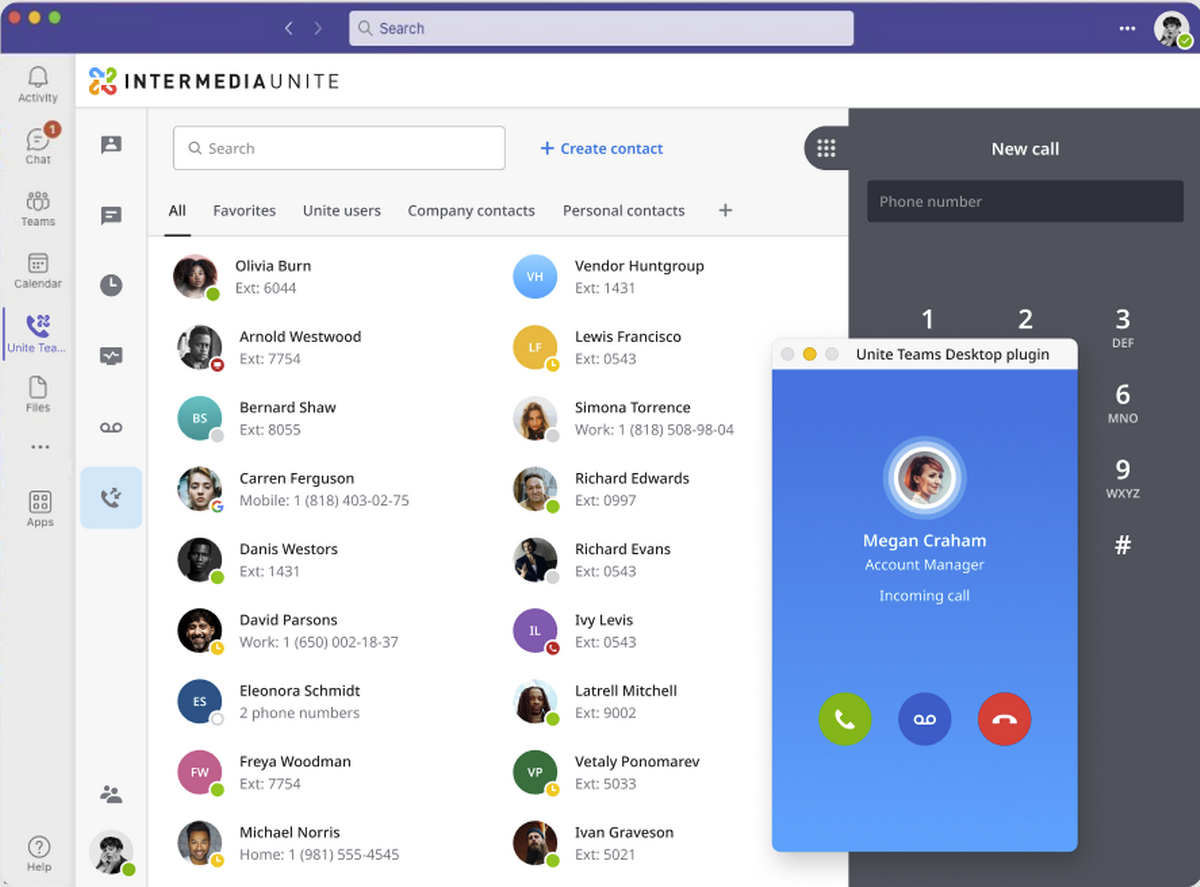
Join us to learn how to optimize the tools of Microsoft Teams and Intermedia Unite together.. You can now use your Teams application for all your voice call
Read Full Story »
Posted in: Business Phone Systems
September 2nd, 2024
In today's fast-paced digital world, businesses can't afford IT downtime or inefficiencies. Every minute of productivity lost is revenue down the drain and an
Read Full Story »
Posted in: IT Support
August 16th, 2024
Remembering passwords for all your different accounts is confusing, frustrating, and, ultimately, a bit of a mess.. Now, imagine you are running a business with
Read Full Story »
Posted in: IT Support
August 13th, 2024
Leading MTSP Enhances Communications for Local Organizations. CONCORD, CA ‐ ATS , a leading managed technology services provider, has announced their Learn
Read Full Story »
Posted in: Cybersecurity
August 5th, 2024
Are you ready to take your business communication to the next level? At ATS, we understand the challenges modern businesses face in staying connected and effici
Read Full Story »
Posted in: Business Phone Systems, Cloud
July 16th, 2024
At ATS, we understand that access control is a security discipline that governs the management of permissions and restrictions on accessing resources and inform
Read Full Story »
Posted in: Cybersecurity, Network Cabling
July 4th, 2024
Leading MTSP Demystifies Cyber Risks and Gives SMBs Immediate Cybersecurity Roadmap to Security and Compliance. CONCORD, CA ‐ ATS a leading managed technol
Read Full Story »
Posted in: Cybersecurity
July 1st, 2024
In today's digital age, cybersecurity has become a paramount concern for organizations of all sizes. With the ever-increasing sophistication of cyber threats,
Read Full Story »
Posted in: Cybersecurity, IT Support
June 18th, 2024
In today's increasingly digitized world, data has become the lifeblood of businesses, organizations, and individuals alike. Losing critical data due to natural
Read Full Story »
Posted in: IT Support, Cloud
June 4th, 2024
Leading MTSP Takes a Proactive Approach to Securing Valuable Information. CONCORD, CA ‐ ATS , a leading managed technology services provider, has announced
Read Full Story »
Posted in: Cybersecurity
June 3rd, 2024
In today's fast-paced business environment, ensuring the safety and efficiency of operations is paramount. Video surveillance has emerged as a powerful tool
Read Full Story »
Posted in: Cybersecurity, Network Cabling
May 31st, 2024
How can Intermedia Unite help your business?. Your business phone system may have served you well, but will it help take your business to the next level or hold
Read Full Story »
Posted in: IT Support, Business Phone Systems
May 20th, 2024
In the digital era, cybersecurity has become a paramount concern for businesses of all sizes. As companies increasingly rely on technology and online systems,
Read Full Story »
Posted in: Cybersecurity
May 3rd, 2024
\t \t\tIn today's digital age, data security is more important than ever for businesses of all sizes. With cyber threats on the rise and the potential for Learn
Read Full Story »
Posted in: Cybersecurity
April 17th, 2024
\t \t\tAn employee is having trouble with a new accounting software she's been working with. She calls the help desk and tells the assistant about the error
Read Full Story »
Posted in: IT Support
April 5th, 2024
Leading MTSP to Collaborate with Industry Thought Leaders at Technology Assurance Group's 23rd Annual Convention. CONCORD, CA ‐ ATS , a leading managed
Read Full Story »
April 1st, 2024
\t \t\tReducing downtime is critical to achieve business continuity. Implementing robust business continuity plans and reliable data backup solutions ensures
Read Full Story »
Posted in: Cybersecurity, IT Support
March 27th, 2024
Leading MTSP Educates Businesses on How to Harness the Power of AI. CONCORD, CA ‐ ATS , a leading managed technology services provider (MTSP), is reporting
Read Full Story »
March 18th, 2024
\t \t\tAs the sun rises, casting light over cities bustling with life, businesses worldwide awaken to a new day's challenges and opportunities. The hybrid Learn
Read Full Story »
Posted in: IT Support, Business Phone Systems
March 1st, 2024
\t \t\tBusinesses face constant threats from cybercriminals lurking in the shadows on the internet. Among the most significant threats is the dark web, a clande
Read Full Story »
Posted in: Cybersecurity
February 23rd, 2024
Background. For over a decade, Metropolitan Van and Storage (Metro) has been a valued client of ATS Communications, a premier managed technology solutions Learn
Read Full Story »
Posted in: Business Phone Systems
February 15th, 2024
\t \t\tBusinesses face an increasing number of cyber threats in today's fast-paced digital landscape. With the growing complexity of IT infrastructures, ensurin
Read Full Story »
Posted in: Cybersecurity, IT Support
February 6th, 2024
Leading Managed Technology Services Provider (MTSP) Delivers Innovative 'Dual Claim Coverage' Model to Minimize Wait Time and Eliminate Hassle. CONCORD, CA
Read Full Story »
Posted in: Cybersecurity
February 1st, 2024
\t \t\tIn today's fast-paced business environment, where customer satisfaction is a key determinant of success, companies constantly seek ways to streamline
Read Full Story »
Posted in: IT Support
January 16th, 2024
\t \t\tIn today's digital age, where personal and sensitive information is stored online, the importance of robust cybersecurity practices cannot be overstated
Read Full Story »
Posted in: Cybersecurity, IT Support
January 10th, 2024
Leading Managed Technology Services Provider Drives Productivity and Employee Satisfaction. CONCORD, CA ‐ ATS , a leading managed technology services Learn
Read Full Story »
Posted in: IT Support, Business Phone Systems
January 2nd, 2024
\t \t\tWe all know that time is money, and in the fast-paced business world, efficiency is the name of the game. If you are still stuck in the era of traditiona
Read Full Story »
Posted in: Cloud
December 18th, 2023
\t \t\tIn the past, the management of an internal communications system involved the purchase, upkeep, and upgrading of hardware and software. These processes
Read Full Story »
Posted in: IT Support, Business Phone Systems
December 2nd, 2023
Leading MTSP Highlights Tax Benefit for Equipment Purchases Before December 31st. CONCORD, CA ‐ ATS , a leading managed technology services provider, is
Read Full Story »
December 1st, 2023
\t \t\tSecurity systems have come a long way from the good old alarms that would ring a bell when someone entered your premises in the dead of the night without
Read Full Story »
Posted in: Network Cabling, Cloud
November 16th, 2023
\t \t\tIn the digital age, email has become the lifeblood of business communication. The channel helps build relationships with clients and make final decisions
Read Full Story »
Posted in: Cybersecurity
November 15th, 2023
Leading MTSP Helps Organizations Benefit by Moving Their Network Into the Cloud. CONCORD, CA ‐ ATS , a leading managed technology services provider (MTSP),
Read Full Story »
Posted in: Cybersecurity, IT Support
November 1st, 2023
\t \t\tIn today's digital age, where data breaches and cyberattacks are rampant, safeguarding sensitive information is paramount for businesses of all sizes
Read Full Story »
Posted in: Cybersecurity
October 16th, 2023
\t \t\tSecuring both physical and digital domains is a critical concern for businesses today. Access control systems offer robust solutions for guarding valuabl
Read Full Story »
Posted in: IT Support, Network Cabling
October 12th, 2023
Leading Managed Technology Services Provider Helps To Secure Organizations. CONCORD, CA ‐ ATS a leading Managed Technology Services Provider (MTSP), announ
Read Full Story »
October 2nd, 2023
\t \t\tEmployee mobility is a key driver of success in today's fast-paced business landscape. Companies increasingly recognize the need to support their workfor
Read Full Story »
Posted in: IT Support, Business Phone Systems, Cloud
September 18th, 2023
\t \t\tLet's get real for a moment. Your office space, physically or virtually, is a hive of buzzing interactions, much like a forest teeming with life. However
Read Full Story »
Posted in: Cybersecurity, IT Support
September 6th, 2023
Leading Managed Technology Services Provider Leverages Big Data & Artificial Intelligence to Accelerate Customer Support with Predictive IT Models. CONCORD, CA
Read Full Story »
September 1st, 2023
In today's data-driven world, businesses are experiencing an exponential increase in the volume of digital information they generate and handle. This data Learn
Read Full Story »
Posted in: Cybersecurity, IT Support
August 21st, 2023
Leading Managed Technology Services Provider Enhances Productivity and Customer Service for Local Organizations. CONCORD, CA – ATS a leading Managed Learn
Read Full Story »
August 18th, 2023
\t \t\tData is the foundation of every corporate activity in a world that is becoming more and more digital. Almost every aspect of companies, from financial
Read Full Story »
Posted in: Cloud
August 1st, 2023
\t \t\tIn today's digital age, where data breaches and cyber threats are rising, companies face significant challenges in safeguarding their sensitive informati
Read Full Story »
Posted in: Cybersecurity, IT Support
July 17th, 2023
\t \t\tIn today's technology-driven and fast-paced world, businesses rely heavily on their information technology (IT) infrastructure for streamlining operation
Read Full Story »
Posted in: IT Support
July 11th, 2023
Leading MTSP Provides Businesses with the Latest in Data Back Up Technology. CONCORD, CA – ATS , a leading Managed Technology Service Provider (MTSP), is
Read Full Story »
Posted in: Cloud
July 1st, 2023
In the digital age, where personal and sensitive information is increasingly stored and accessed online, ensuring the security of our data has become paramount
Read Full Story »
Posted in: Cybersecurity, IT Support
June 28th, 2023
Leading MTSP Helps Organizations Avoid Penalties Due to Poor Data Management Practices. CONCORD, CA –– ATS , a leading managed technology services
Read Full Story »
Posted in: Cybersecurity
June 15th, 2023
Remote monitoring and management (RMM) technology is one of the most powerful tools available for businesses today. It provides a range of benefits that help
Read Full Story »
Posted in: IT Support
June 1st, 2023
Endpoint protection services are designed to protect computer systems, such as laptops, desktops, and mobile devices, from malicious attacks. Endpoint protectio
Read Full Story »
Posted in: Cybersecurity
May 23rd, 2023
Email filtering is a process used to detect, block or divert emails that contain malicious content, fraudulent material, or spam. It is designed to help protect
Read Full Story »
Posted in: Cybersecurity
May 19th, 2023
\tTechnology Assurance Group Recognizes ATS Communications as the Elite Provider at their 22nd Annual Convention. CONCORD, CA – ATS, a leading managed
Read Full Story »
May 11th, 2023
The benefits of structured cabling have been known for some time, however many businesses are still not utilizing it to its fullest potential. Structured cablin
Read Full Story »
Posted in: IT Support
April 25th, 2023
Video surveillance solutions for businesses are used to monitor and protect facilities, employees, inventory, the public, and much more. These systems provide a
Read Full Story »
Posted in: Cybersecurity
April 13th, 2023
Leading MTSP Combines Cyber security Experts with State-of-the-Art Technology. CONCORD, CA – ATS Communications, a leading managed technology services
Read Full Story »
April 4th, 2023
Unified Communications as a Service (UCaaS) is an all-in-one communications solution that combines voice, video, messaging, and collaboration functions into a
Read Full Story »
Posted in: IT Support
March 20th, 2023
Unified communications (UC) is an umbrella term used to describe the integration of real-time communication services such as instant messaging, presence informa
Read Full Story »
Posted in: IT Support
March 17th, 2023
Leading MTSP Invited to Conference with Thought Leaders on Exceeding Customer Expectations. CONCORD, CA - ATS Communications, a leading managed technology Learn
Read Full Story »
March 2nd, 2023
Is your business equipped for a power outage? Can it handle several hours of downtime? Are your servers backed up in the event of a virus attack? Businesses
Read Full Story »
Posted in: Cloud
February 22nd, 2023
Multi-factor authentication (MFA) is an extra layer of security used to ensure that only authorized individuals can access a system or application. This type of
Read Full Story »
Posted in: IT Support
February 10th, 2023
Cyber security awareness training is a program designed to educate employees about the risks of cyber-attacks and other digital threats, the importance of Learn
Read Full Story »
Posted in: IT Support
January 24th, 2023
Leading MTSP Shares Why Email Is an Easy Way to Destroy A Company's Network. CONCORD, CA - ATS Communications, a leading managed technology services provider
Read Full Story »
January 24th, 2023
Dark web scanning is the process of actively seeking out publicly available data related to an organization, its employees, customers, vendors, or partners on
Read Full Story »
Posted in: IT Support
January 5th, 2023
Cloud phone systems are quickly becoming the standard for any business that wants to stay competitive. Moving your company's phone system to the cloud allows
Read Full Story »
Posted in: IT Support
December 27th, 2022
A virtual desktop for businesses is a computing system that allows multiple users to access the same computer from different locations. This type of technology
Read Full Story »
Posted in: IT Support
December 22nd, 2022
Leading MTSP Reminds Businesses to Act Soon Before December 31st Deadline. CONCORD, CA – ATS Communications, a leading managed technology services provide
Read Full Story »
December 16th, 2022
Antivirus and email filtering are important tools in keeping your computer safe from malicious activity. By regularly performing security scans and monitoring
Read Full Story »
Posted in: Cybersecurity
November 30th, 2022
Desktop management solutions are becoming increasingly popular among businesses of all sizes. These solutions provide organizations with a wide range of benefit
Read Full Story »
Posted in: IT Support
November 21st, 2022
Leading Managed Technology Services Provider Helps Local Businesses Plan Ahead for Any Situation. CONCORD, CA - ATS Communications a leading managed technology
Read Full Story »
November 8th, 2022
As the world increasingly moves towards remote work, it's more important than ever for businesses to have a way to monitor and manage their systems remotely
Read Full Story »
Posted in: IT Support
October 24th, 2022
Unified Communications as a Service (UCaaS) is a cloud-based communication and collaboration solution that offers a comprehensive set of features and tools. It
Read Full Story »
Posted in: IT Support
October 17th, 2022
Leading Managed Technology Services Provider Advances the Communication Capabilities of Local Businesses. CONCORD, CA – ATS Communications, a leading
Read Full Story »
October 11th, 2022
Do you think your password is secure? Everyone has their favorite password, which they tend to use everywhere. However, smart people know they shouldn't use
Read Full Story »
Posted in: Cybersecurity
September 21st, 2022
Leading MTSP Shares How to Protect Businesses from Cybercrime. CONCORD, CA - ATS Communications, a leading managed technology services provider (MTSP), is Learn
Read Full Story »
September 6th, 2022
A business's top priority is always efficient working and smooth outputs. This is because the better they work, the more the company will profit. This is one
Read Full Story »
Posted in: IT Support
August 16th, 2022
Leading MTSP Improves Communication Among Region’s Businesses. CONCORD, CA – ATS Communications a leading managed technology services provider Learn
Read Full Story »
August 3rd, 2022
Hackers are a growing concern for most businesses. In order to protect against them, it is important to understand what they do and how they do it. While the
Read Full Story »
Posted in: Cybersecurity
July 11th, 2022
In today's digital world, where most transactions are done online, and users don't need to go outside their homes to get most things, it attracts some aspects
Read Full Story »
Posted in: IT Support
June 14th, 2022
Leading MTSP Shares How Businesses Can Gain a Competitive Advantage with AI. CONCORD, CA – ATS Communications a leading managed technology services provid
Read Full Story »
June 8th, 2022
There is no denying that technology has made our lives easier and far more convenient. From the ability to connect people through a single tap on your phone to
Read Full Story »
Posted in: IT Support
May 18th, 2022
Technology Assurance Group and Intermedia Recognize ATS for Superior Performance. CONCORD, CA – ATS, a leading managed technology services provider, Learn
Read Full Story »
April 20th, 2022
Communication is a vital element in a business's success and helps businesses prosper and achieve their goals. Unified Communication is a service that unites
Read Full Story »
Posted in: IT Support, Business Phone Systems
April 11th, 2022
Leading MTSP Increases Their Customers' Productivity with New Microsoft Applications. CONCORD, CA – ATS Communications a leading managed technology servic
Read Full Story »
March 31st, 2022
Businesses across industries invest a lot of time and put in hard work to ensure their network's health and performance. After all, if something goes wrong with
Read Full Story »
Posted in: IT Support
March 21st, 2022
Are you looking for a technology partner for your business that can provide you with all your IT needs and solutions to improve your business? Then you have
Read Full Story »
Posted in: IT Support
March 18th, 2022
Leading MTSP Shares Most Common Cause of Cyberattacks and How to Secure Any Organization. CONCORD, CA – ATS Communications a leading managed technology
Read Full Story »
February 22nd, 2022
Leading Managed Technology Services Provider Shares Significant Findings About IT Growth. CONCORD, CA – ATS Communications, a leading managed technology
Read Full Story »
January 24th, 2022
The internet has devolved into a dangerous environment littered with malicious links, computer viruses, and malware. Data breaches are growing more common, and
Read Full Story »
Posted in: IT Support
January 20th, 2022
CFO of ATS Communications Receives Award Amongst Tech Leaders. CONCORD, CA – ATS Communications, a leading managed technology services provider (MTSP),
Read Full Story »
December 15th, 2021
\t \t Leading MTSP Reminds Business Owners to Reinvest Before December 31st. \t CONCORD, CA - ATS Communications, a leading managed technology services provider
Read Full Story »
November 4th, 2021
Leading Managed Technology Services Provider to Share Business Expertise and Technology Foresight with Organizations Throughout the U.S. and Canada. CONCORD, CA
Read Full Story »
October 6th, 2021
Leading Managed Technology Services Provider Invests in Advanced Cybersecurity Tools. CONCORD, CA – ATS Communications, a leading managed technology Learn
Read Full Story »
September 8th, 2021
Leading Managed Technology Services Provider Keeps SMBs Safe, Once Again. CONCORD, CA – ATS Communications, a leading managed technology services provider
Read Full Story »
August 6th, 2021
Leading Managed Technology Services Provider Shares How SMBs Can Protect Themselves from Cyberattacks and Ransomware Threats. CONCORD, CA – ATS Communicat
Read Full Story »
July 6th, 2021
Bay Area and Silicon Valley MTSPs Unite Forces to Augment Customer Experience. CONCORD, CA – ATS, a leading managed technology services provider (MTSP),
Read Full Story »
June 29th, 2021
Leading Managed Technology Services Provider Shares How AI is Evolving SMB Defenses. CONCORD, CA – ATS Communications a leading managed technology service
Read Full Story »
May 28th, 2021
Leading Managed Technology Services Provider Maximizes Employee Productivity As Businesses Transition to the New Normal. CONCORD, CA – ATS Communications,
Read Full Story »
Posted in: IT Support
May 4th, 2021
Startling Statistics Reveal Challenges of Healthcare Industry's Ability to Safeguard Patient Records. CONCORD, CA – ATS Communications, a leading managed
Read Full Story »
April 28th, 2021
With the Legion of Downtime out there conspiring to shut down businesses, who can protect your business and save you from their hefty costs?. Contact us today
Read Full Story »
Posted in: IT Support
April 14th, 2021
ATS Communications Helps Customers Protect Their Precious Networks. CONCORD, CA – ATS Communications a leading managed technology services provider (MTSP)
Read Full Story »
April 1st, 2021
For more than 40 years, ATS has provided innovative technology to California businesses. We pride ourselves on our reputation of designing, implementing, and
Read Full Story »
Posted in: IT Support, Cloud
March 22nd, 2021
Leading Managed Technology Services Provider Reports on Increases in AI Prevalence. CONCORD, CA - ATS Communications a leading managed technology services Learn
Read Full Story »
February 23rd, 2021
Leading Managed Technology Services Provider Educates Businesses on Dramatic Increase in Cybercrime Directed at Small-Business Owners and How to Prevent It
Read Full Story »
Posted in: IT Support
January 20th, 2021
Many businesses have found themselves making the switch to the cloud, and when you look at everything it offers it's not hard to see why. They give a wealth of
Read Full Story »
Posted in: Cybersecurity, IT Support, Cloud
January 13th, 2021
Increase in Cybercrime Directed at Small-Business Owners and How to Prevent It CONCORD, CA - ATS Communications, a leading managed technology services provider
Read Full Story »
Posted in: IT Support
December 31st, 2020
Many companies have made the switch to remote working this year due to the pandemic, doing their best to adapt to changing work culture. However, the struggle
Read Full Story »
Posted in: Cybersecurity, IT Support, Cloud
December 8th, 2020
Moving to the cloud will increase your business's cybersecurity. The secure data centers utilized to host data and applications are much more secure than what
Read Full Story »
Posted in: IT Support
December 1st, 2020
Businesses that have switched to a remote workforce are faced with new challenges such as collaboration and communication. Employees who are used to working in
Read Full Story »
Posted in: IT Support, Cloud
November 30th, 2020
ATS Communications, a leading managed technology services provider (MTSP), announced today that the COVID-19 pandemic has drastically increased the forecasted
Read Full Story »
October 30th, 2020
60-Day Notice. As ATS has previously communicated in blogs, emails, and personal conversations, Mitel has slowly been implementing their end of life strategy
Read Full Story »
Posted in: IT Support
October 14th, 2020
ATS Communications a leading managed technology services provider (MTSP), announced today that it is helping customers take advantage of a substantial tax Learn
Read Full Story »
September 30th, 2020
Any business can tell you that there are a lot of choices for working remotely, as the pandemic forced many of them to learn the sheer volume of options availab
Read Full Story »
Posted in: IT Support
September 16th, 2020
ATS Communications, a leading managed technology services provider (MTSP) announced today that the company is preparing small to mid-sized business (SMB) owners
Read Full Story »
August 19th, 2020
CONCORD, CA - ATS Communications, a leading managed technology services provider (MTSP), announced today that the company is building technology plans for Learn
Read Full Story »
August 18th, 2020
Businesses have been forced to adapt to the coronavirus by moving their workforce to remote offices. Moving to a remote workforce can be challenging, regardless
Read Full Story »
Posted in: IT Support, Cloud
July 26th, 2020
We are a leading managed technology services provider (MTSP), announced today that the company is supplying small to mid-sized businesses (SMBs) with thermal
Read Full Story »
July 23rd, 2020
Companies made the switch to remote work to keep employees safe from COVID-19, and with the pandemic still affecting businesses, long-term remote work appears
Read Full Story »
Posted in: IT Support
July 20th, 2020
Businesses everywhere have learned that disaster can strike at any time, and they can last for unforeseeable lengths of time. Now more than ever companies need
Read Full Story »
Posted in: IT Support, Cloud
July 8th, 2020
CONCORD, CA - ATS Communications, a leading managed technology services provider (MTSP), announced today that the company is helping small to mid-sized business
Read Full Story »
June 30th, 2020
As the mandates for isolation and closure are slowly lifting, many business are finding themselves presented with a new challenge. What do they do with their
Read Full Story »
Posted in: Cybersecurity, IT Support
June 9th, 2020
With businesses moving to a remote workforce, they face different challenges that they didn't deal with before. One of those challenges is how to keep your
Read Full Story »
Posted in: Cybersecurity, IT Support
June 3rd, 2020
As businesses are transitioning to a remote workforce during the COVID-19 pandemic, they require tools to allow their employees to be productive and efficient
Read Full Story »
Posted in: IT Support, Cloud
June 3rd, 2020
CONCORD, CA - ATS Communications, a leading managed technology services provider (MTSP) is empowering business owners to accelerate innovation within their
Read Full Story »
May 8th, 2020
CONCORD, CA - ATS Communications a leader in managed technology services, announced today that the company is proactively helping small to midsized businesses
Read Full Story »
May 5th, 2020
As more companies are switching to a remote workforce, there is a learning curve to using the new technology. Whether it is adjusting to the unified communicati
Read Full Story »
Posted in: IT Support, Cloud
April 30th, 2020
Businesses everywhere are making the switch to working remotely, as COVID-19 causes people to be quarantined in their homes and offices to keep their doors
Read Full Story »
Posted in: IT Support
April 21st, 2020
Hackers will often look to exploit any weakness they can find, whether it is through technological means or through human curiosity and concern. With the rapid
Read Full Story »
Posted in: Cybersecurity
April 9th, 2020
As we face together the reality of needing to work remotely for an extended period, rely on the ATS team to help you make the best total decisions for your
Read Full Story »
Posted in: IT Support
April 2nd, 2020
With the growing COVID-19 crisis, it is becoming increasingly necessary for your employees to be able to work remotely. At ATS Communications, we have cloud
Read Full Story »
Posted in: IT Support, Cloud
March 30th, 2020
ATS has collected tips and actual client experiences & lessons about how to stay productive, cyber-safe, and get the fastest service from us right now.. What's
Read Full Story »
Posted in: Cybersecurity, IT Support
March 16th, 2020
To our valued clients:. The spread of the COVID19 (Coronavirus) is requiring us to rapidly adapt and change our work routines and our personal lives. This Learn
Read Full Story »
Posted in: IT Support
March 13th, 2020
It May Not Be As Hard As You Think. In these unprecedented times, some businesses are evaluating their options for their staff to work remotely so they can
Read Full Story »
Posted in: IT Support
March 9th, 2020
CONCORD, CA – ATS Communications a leading managed technology services provider (MTSP) is leveraging Microsoft Azure to help eliminate outdated IT hardwar
Read Full Story »
March 4th, 2020
Your business's IT security is critical to its well-being and success. Your company likely stores copious amounts of sensitive data about your finances and your
Read Full Story »
Posted in: Cybersecurity, IT Support
February 27th, 2020
With each passing year progressively, more businesses are switching over to the Cloud. Yet there are still companies that haven't made the leap or taken advanta
Read Full Story »
Posted in: IT Support, Cloud
February 18th, 2020
This week marks the inception of two new federal laws that any business or entity that uses a Multi-line Telephone System. These two laws are Kari's Law and the
Read Full Story »
February 3rd, 2020
CONCORD, CA – ATS Communications, a leading managed technology services provider (MTSP), announced today that the company is leveraging the power of Learn
Read Full Story »
January 29th, 2020
With every passing year, a new application inevitably gets presented as the future of technology. However, one such innovative technology has been universally
Read Full Story »
Posted in: IT Support, Cloud
January 16th, 2020
Protecting your data networks is one of the most important things your company can do. At ATS, our experience and expertise enable us to bring the most innovati
Read Full Story »
Posted in: Cybersecurity, IT Support
January 9th, 2020
Network security is a hot topic nowadays, and rightfully so. Protecting your data networks from hackers is one of the most important things your business needs
Read Full Story »
Posted in: Cybersecurity, IT Support
January 8th, 2020
CONCORD, CA – ATS Communications is actively engaged in educating the business community with how SMBs can utilize the latest in technology to position
Read Full Story »
December 3rd, 2019
Has your business been affected by the recent catastrophic California Wildfires? At ATS, we not only have the solutions to assist in the recovery of your operat
Read Full Story »
Posted in: IT Support, Cloud
November 21st, 2019
As cyber-attacks continue to intensify, businesses are having a hard time finding skilled cybersecurity workers to protect their operations. The cybersecurity
Read Full Story »
Posted in: Cybersecurity, IT Support
November 8th, 2019
\t Are you experiencing an influx of operating costs due to maintenance and upgrades for your IT and phones? Or are you a small business looking to avoid paying
Read Full Story »
Posted in: IT Support
November 7th, 2019
CONCORD, CA – ATS Communications a leading managed technology services provider (MTSP), announced today that the company proactively monitors the Dark Web
Read Full Story »
November 2nd, 2019
SOCKS stands for Secure Over Credential-Based Kerberos Services, which is also known as SOCKets and is one of the earliest network protocol systems ever used
Read Full Story »
Posted in: IT Support
October 2nd, 2019
Concord, CA – Announcing the launch of a Secure WiFi-as-a-Service program to protect our customers from cyber attacks through wireless access points. Over
Read Full Story »
Posted in: Cybersecurity
September 30th, 2019
There are still many businesses that continue to operate on the Windows 7 platform, as it has been the most widely used operating system in the world. However,
Read Full Story »
Posted in: IT Support
September 25th, 2019
The cloud is transforming the way businesses operate, allowing for far more flexibility, efficiency, and better manageability than ever before. Cloud computing
Read Full Story »
Posted in: IT Support, Cloud
August 30th, 2019
On May 2017, over 300,000 victims worldwide were affected by the WannaCry ransomware attack that lasted four full days. The attack blocked data from users until
Read Full Story »
Posted in: IT Support
August 28th, 2019
CONCORD, CA – Did you know that we are advising SMBs (small to mid-sized businesses) on how to fully leverage the benefits of a remote workforce, bolster
Read Full Story »
August 21st, 2019
Windows 7 is coming to an end, so what does that mean for businesses still running on the platform? It may mean complex migrating, tons of time and resources
Read Full Story »
Posted in: IT Support
August 20th, 2019
The average workplace can be a money pit with unhappy employees who, in turn, produce unsatisfied customers and create a workplace disaster. The key to improvin
Read Full Story »
Posted in: IT Support, Cloud
August 17th, 2019
See the entire album on Facebook Learn more from ATS Communications. Contact us today for expert guidance. Protect your business technology with ATS. Expert IT
Read Full Story »
Posted in: Business Phone Systems
August 3rd, 2019
CONCORD, CA – We are proud to announce that we are alerting small to midsized businesses (SMBs) about the prevalence of robocall scams and how any organiz
Read Full Story »
July 14th, 2019
It is common for companies to underestimate their security risks and think that specific attacks could never happen to their business until it happens. While it
Read Full Story »
Posted in: Cybersecurity, IT Support
July 12th, 2019
12th Annual MSP 501 Identifies Top Forward-Thinking Global MSPs & Leading Trends in Managed Services. ATS Communications has been named as one of the world's
Read Full Story »
Posted in: IT Support
July 10th, 2019
Many businesses have changed the traditional business model to adapt to the way people now choose to work. With Workplace-as-a-service, small to mid-sized Learn
Read Full Story »
Posted in: IT Support
June 25th, 2019
During the beginning stages of operations, demand can be slow at first and then gradually start picking up, but what happens when small demand increases to
Read Full Story »
Posted in: IT Support
June 24th, 2019
Having available ongoing support for your IT services is vital for your business to thrive, and we want to ensure that your business stays on top of its operati
Read Full Story »
Posted in: IT Support
June 19th, 2019
Switching from an old phone system to a modern system is something that many enterprises resist. Some businesses cling to their legacy phone system due to the
Read Full Story »
Posted in: IT Support
June 18th, 2019
Independent market researcher Vanson Bourne surveyed 850 respondents in small- and medium-sized businesses across the globe about cybersecurity. The findings
Read Full Story »
Posted in: Cybersecurity
June 13th, 2019
CONCORD, CA - ATS Communications, a leading managed technology services provider (MTSP), is advising small and mid-sized businesses (SMBs) to move to Microsoft
Read Full Story »
June 12th, 2019
Today we are taking a moment to recognize an impressive achievement made by one of our employees. Some of you may be familiar with Randy Anderson and his work
Read Full Story »
May 25th, 2019
Phishing attacks occur when communication that appears to be reputable is fraudulent. These sorts of scams are made to extract personal and sensitive informatio
Read Full Story »
Posted in: Cybersecurity
May 9th, 2019
Throughout 2018 data breaches were a typical story from corporations of every size. The stories either tell of a breach that happened during the year or they're
Read Full Story »
Posted in: Cybersecurity, IT Support
May 8th, 2019
CONCORD, CA – ATS Communications a leading managed technology services provider (MTSP), announced today that the company now offers SD-WAN-as-a-Service to
Read Full Story »
April 20th, 2019
The possibilities are endless when it comes to being in the cloud. The majority of businesses are already in the cloud in some capacity, and your business may
Read Full Story »
Posted in: IT Support, Cloud
April 15th, 2019
CONCORD, CA – We are helping small to mid-sized businesses (SMBs) to take advantage of dramatically increased capabilities in surveillance cameras. As
Read Full Story »
March 16th, 2019
CONCORD, CA – February 2019 – ATS Communications, a leading managed technology services provider (MTSP), announced today that they have been invited
Read Full Story »
February 25th, 2019
When it comes to keeping your business operational, there are two pillars it can't stand without. If your servers or network fail your business, what could you
Read Full Story »
Posted in: IT Support
February 5th, 2019
CONCORD, CA – We are proud to announce a new solution to help small to midsized businesses (SMBs) equip themselves with the necessary cybersecurity protec
Read Full Story »
January 29th, 2019
Your business needs a dependable and robust cybersecurity solution, plain and simple. As technology continues to advance and new threats are coming to the Learn
Read Full Story »
Posted in: Cybersecurity
January 24th, 2019
When disaster strikes, it leaves ruin in its wake. It can destroy everything leaving nothing behind when its over. Sometimes you're lucky if your office buildin
Read Full Story »
Posted in: IT Support, Cloud
December 21st, 2018
CONCORD, CA – ATS Communications a leading managed technology services provider (MTSP), is helping small to mid-sized businesses (SMBs) secure their Learn
Read Full Story »
December 7th, 2018
ATS provides IT consulting services for many industries, from nonprofit and Legal sectors to healthcare and biotech, we offer industry expertise to help you
Read Full Story »
Posted in: IT Support
November 21st, 2018
Anyone in IT can tell you that it's a hectic job to manage. You have to make sure everything tech related is running smoothly and efficiently. That's if it's a
Read Full Story »
Posted in: IT Support
November 20th, 2018
CONCORD, CA – ATS Communications a leading managed technology services provider (MTSP), is helping small to mid-sized businesses (SMBs) protect themselves
Read Full Story »
November 15th, 2018
Security for your business is crucial. Everyone knows that, but settling for any old security system won't give you the protection you need against modern-day
Read Full Story »
Posted in: Cybersecurity
October 22nd, 2018
The Cloud is quickly becoming a dominant choice for businesses. From hosting their data to even being what they use to host their phone systems. Its accessibili
Read Full Story »
Posted in: Cloud
October 15th, 2018
CONCORD, CA – InSpeed Networks™ the leading provider of self-driving SDWAN solutions and ATS Communications, a leading technology firm headquartered
Read Full Story »
September 27th, 2018
Are your wires getting crossed? No matter how many gadgets you add, the quality of your communications starts with properly structured cabling. You need a solid
Read Full Story »
Posted in: IT Support
September 19th, 2018
CONCORD, CA – ATS Communications, a leading managed technology services provider (MTSP), is helping small to mid-sized businesses (SMBs) thwart cyberattac
Read Full Story »
August 10th, 2018
As technology gets more advanced, so do the bad guys. That's why at ATS we make your network security our priority and help you avoid disruptions to your operat
Read Full Story »
Posted in: Cybersecurity
August 7th, 2018
CONCORD, CA – ATS Communications, a leading managed technology services provider, is helping small to mid-sized businesses (SMBs) navigate the recent
Read Full Story »
July 10th, 2018
Running automatic updates for applications and operating systems helps protect your company's digital devices, but those updates can harm productivity if not
Read Full Story »
Posted in: Cybersecurity, IT Support
July 5th, 2018
Did you know email can be a huge security risk for your businesses? Careless or unaware employees can click on malicious emails, opening up your network to
Read Full Story »
Posted in: IT Support
July 4th, 2018
ATS Communications a leading managed technology services provider, is helping small to mid-sized businesses (SMBs) to prevent cryptojacking attacks from damagin
Read Full Story »
July 3rd, 2018
If your business is considering a Bring Your Own Device environment, there's a great deal of security preparation work to do beforehand. A successful BYOD Learn
Read Full Story »
Posted in: IT Support
June 27th, 2018
Shifting to IT management support services can make a huge difference in reducing your business' operational bottom-line. IT management goes a long way to Learn
Read Full Story »
Posted in: IT Support
June 26th, 2018
Making the switch to a Bring Your Own Device (BYOD) business environment extends well beyond the decision to let employees choose their devices. Your business
Read Full Story »
Posted in: IT Support
June 21st, 2018
The dark web is a hive of scum and villainy that waits for the opportunity to steal your valuable information - and potentially even steal your identity. Taking
Read Full Story »
Posted in: IT Support
June 20th, 2018
Businesses have more to worry about than ever when it comes to dealing with new forms of cyber-attacks. The shift to a BYOD workplace adds even more challenges
Read Full Story »
Posted in: Cybersecurity, IT Support
June 19th, 2018
Financial services providers find their IT challenges list is always growing because of security issues, employee needs, customer protection, regulatory laws
Read Full Story »
Posted in: IT Support
June 10th, 2018
As a business with a highly mobile workforce, you need File Sync and Share (FSS) solutions that are not going to leave your important business data exposed
Read Full Story »
Posted in: IT Support
May 31st, 2018
CONCORD, CA – ATS Communications a leading managed technology services provider, announced today that the company will now be serving as a Virtual CIO
Read Full Story »
May 29th, 2018
While many of the technical needs at nonprofit and for-profit businesses overlap, there are still several key considerations for nonprofits looking for the
Read Full Story »
Posted in: IT Support
May 21st, 2018
To understand why some industries are targeted in cyber attacks more often than others, it's important to understand what drives hackers and what makes a target
Read Full Story »
Posted in: Cybersecurity
May 14th, 2018
Technology improvements have made it easy for employees to get work done on their personal devices from anywhere. However, that freedom comes with additional
Read Full Story »
Posted in: Cybersecurity
May 14th, 2018
We've talked a lot recently on our blog about everything from new partners, to virtualization, cloud solutions and carriers but now we want to get back to the
Read Full Story »
Posted in: IT Support
May 3rd, 2018
Often, businesses don't prepare for email disasters until after one has hit. But while email may comprise just a small part of a company's day-to-day operation,
Read Full Story »
Posted in: Cybersecurity, IT Support
April 26th, 2018
It's easy to grow jaded about presentation software. After all, each new version of PowerPoint and Keynote may feel like the equivalent of the same old room
Read Full Story »
Posted in: IT Support
April 19th, 2018
The FCC net neutrality 3–2 repeal vote of December 2017 could lead to major concerns for IT staff at small and medium businesses. As of February 2018, the
Read Full Story »
Posted in: IT Support
April 11th, 2018
Law firms face many unique IT management challenges that stem from the confidential nature of the information they work with. And that confidential data is why
Read Full Story »
Posted in: IT Support
April 3rd, 2018
While there's plenty of technology available to keep your business's data protected, the human element is still the most important piece to consider in safeguar
Read Full Story »
Posted in: Cybersecurity
March 29th, 2018
Cyberattacks are a major security concern for any business that uses the Internet. Even if your company doesn't have a website, hackers can go after your email
Read Full Story »
Posted in: Cybersecurity
March 26th, 2018
While all employees need to be mindful of security, the nature of C-level executives makes them more attractive targets for hackers. That means it's necessary
Read Full Story »
Posted in: Cybersecurity
March 22nd, 2018
We announced today that we have been selected to attend Technology Assurance Group’s 18th Annual Convention in San Diego, California on April 28th through
Read Full Story »
March 19th, 2018
Giving a presentation can be stressful, so dealing with technology issues at the last minute is the last thing you want when attempting a professional delivery
Read Full Story »
Posted in: IT Support
March 19th, 2018
As a business owner, ATS knows that your number one priority is the safety and security of your employees and assets. Whether you want to ensure that you're
Read Full Story »
Posted in: IT Support
March 13th, 2018
The Mirai botnet refers to a massive-scale network of Linux-running Internet of Things devices turned into remote-controlled bots through a malware infection
Read Full Story »
Posted in: Cybersecurity
March 5th, 2018
When used well, instant messaging tools can increase productivity while offering secure information exchange in your office. Messaging works in business environ
Read Full Story »
Posted in: IT Support
February 28th, 2018
Because IT staff get so invested in making sure software, networking and security elements are working, they sometimes overlook the human, environmental and
Read Full Story »
Posted in: IT Support
February 27th, 2018
ATS Communications a leader in managed technology services, announced today that the company has partnered with ID Agent, to enhance the security of SMBs (small
Read Full Story »
February 12th, 2018
At the end of 2017, the world learned about Spectre and Meltdown: two far-reaching security threats that exploit how CPUs work to expose protected information
Read Full Story »
Posted in: Cybersecurity
February 8th, 2018
A cyberattack crisis management plan is your business's best defense for minimizing cyberattack damage after technology-based preventative measures have failed
Read Full Story »
Posted in: Cybersecurity
February 5th, 2018
Businesses have a lot to gain by hiring remote employees, including the ability to recruit from a larger talent pool and the potential for less expensive workpl
Read Full Story »
Posted in: IT Support
February 1st, 2018
It seems like not too long ago, we were still storing most of our data on desktops, maybe securing a backup on the most vital data on disks and a remote drive
Read Full Story »
Posted in: IT Support
January 29th, 2018
Financial services companies should embrace a healthy dose of caution when implementing new fintech in their business. Fintech, or any technological innovation
Read Full Story »
Posted in: Cybersecurity
January 22nd, 2018
For many businesses, it is difficult to gauge how helpful IT management can be in the workplace on a day-to-day basis — mainly because when things are
Read Full Story »
Posted in: IT Support
January 18th, 2018
ATS knows all too well the troubles that many IT teams have, balancing daily troubleshooting support with the management of service providers, technology projec
Read Full Story »
Posted in: IT Support
January 16th, 2018
Hot off the tail of the massive 2017 Equifax breach that exposed personal information of 143 million customers, businesses are on high alert concerning IT Learn
Read Full Story »
Posted in: Cybersecurity
December 28th, 2017
Avoid costly data security breaches by training your staff to check for secure connections when handling private information on the Internet. Secure Hyper Text
Read Full Story »
Posted in: Cybersecurity, IT Support
December 28th, 2017
There are many ways to reuse an old computer. Replacing an old computer that still works is a good feeling. The device survived the replacement cycle. However,
Read Full Story »
Posted in: IT Support
December 20th, 2017
Today we announced our predictions for the future of the technology sector. We are preparing business owners for the anticipated technology explosion in 2018,
Read Full Story »
December 6th, 2017
Oh, the woes of trying to put a new IT budget together. With the new year just around the corner, many of our customers are looking at their service providers
Read Full Story »
Posted in: IT Support
November 22nd, 2017
After years of improving smartphone glass durability, a shift design is bringing back the perils of dropping the device only to discover the glass has cracked
Read Full Story »
Posted in: IT Support
November 16th, 2017
Businesses use surge protectors every day without thinking about them; however, they are an incredibly important piece of technology that can make the differenc
Read Full Story »
Posted in: IT Support
November 8th, 2017
It's inevitable: employees working hard on a time-consuming project and then out of nowhere, the lights start to flicker and the power goes out. Suddenly, those
Read Full Story »
Posted in: IT Support
October 24th, 2017
Unfortunately, hurricanes Irma and Harvey had an historic destructive impact on SMBs (Small to Mid-sized Businesses) in Florida and Texas. Many companies in
Read Full Story »
October 24th, 2017
A new spear phishing technique, being used in a hacking campaign called FreeMilk , takes advantage of a Microsoft Office vulnerability in order to hijack existi
Read Full Story »
Posted in: Cybersecurity
October 19th, 2017
We love the good news from Mitel – they have acquired Toshiba's assets and will still be supporting the current Toshiba platforms for at least five years!
Read Full Story »
Posted in: Business Phone Systems
October 17th, 2017
So far, 2017 has been an eventful year for increasing access to password-alternative smartphone and laptop unlocking techniques. Notably, Samsung added Face
Read Full Story »
Posted in: Cybersecurity
October 10th, 2017
Wireless charging in the workplace has the potential to make it easier for your employees keep their arsenal of devices running throughout the day with fewer of
Read Full Story »
Posted in: IT Support
October 3rd, 2017
The 2017 Equifax hack is teaching a painful lesson about the necessity of businesses keeping up with software patches for IT security and to avoid catastrophic
Read Full Story »
Posted in: Cybersecurity
September 26th, 2017
With proper planning, your business can take advantage of USB flash drive technology to increase productivity, while eliminating most of the medium's inherent
Read Full Story »
Posted in: Cybersecurity, IT Support
September 25th, 2017
Combined Company Ideally Positioned to Take Customers to the Cloud Seamlessly and Simply as a Global UCaaS Market Leader. OTTAWA, Sept. 25, 2017 (GLOBE NEWSWIRE
Read Full Story »
Posted in: Business Phone Systems
September 23rd, 2017
ATS Communications a leading provider of unified communications has announced that the company is certified to provide cybersecurity solutions to SMBs (small to
Read Full Story »
September 19th, 2017
Setting up your conference room for wireless screen mirroring is the answer to employees sharing in a collective groan when it's time to connect a computer or
Read Full Story »
Posted in: IT Support
September 17th, 2017
We believe your focus should be on productivity and profitability, not the day to day logistics of keeping your network up and running. Having 40 years experien
Read Full Story »
Posted in: IT Support
September 12th, 2017
It's easy to take a functional Internet connection for granted until it's no longer working. When that Internet connection inevitably goes down, your business
Read Full Story »
Posted in: IT Support
September 6th, 2017
Online retailers are already working on business strategies for the Thanksgiving, Black Friday, and Cyber Monday online shopping weekend months in advance Learn
Read Full Story »
Posted in: IT Support
August 29th, 2017
Adobe Flash, the web content standard the Internet loves to hate, will soon meet its ultimate demise: Adobe will finish phasing out the platform in 2020. Flash,
Read Full Story »
Posted in: Cybersecurity, IT Support
August 24th, 2017
We pride ourselves in our customer based solutions, and fully understand that when it comes to business not one-size fits all. With over 40 years of experience
Read Full Story »
Posted in: Cloud
August 22nd, 2017
In July of 2017, some Windows 10 users received an error message when trying to install the Creators Update, stating, 'Windows 10 is no longer supported on this
Read Full Story »
Posted in: IT Support
August 17th, 2017
We announced today that we will be launching an awareness campaign to educate small to mid-sized business (SMB) owners about the importance of having a 4G Learn
Read Full Story »
August 15th, 2017
According to a 2017 published study by Advisen and Experian, one of the biggest threats facing small businesses comes from within, such as overconfidence in the
Read Full Story »
Posted in: Cybersecurity, IT Support
August 8th, 2017
Ransomware, a type of malware that holds a computer hostage and tries to force the victim to pay money to recover access, is a nightmare for any business, but
Read Full Story »
Posted in: Cybersecurity, IT Support
August 7th, 2017
We want take a moment to share with you some updates and provide some clarification with regards to your Toshiba system(s) currently installed. As we shared
Read Full Story »
Posted in: IT Support
August 1st, 2017
Hijacked accounts are an IT security nightmare, so it makes sense for your company to look at new technology for better ways to keep your digital assets safe
Read Full Story »
Posted in: Cybersecurity, IT Support
July 27th, 2017
Consolidation accelerates Mitel's move to high-growth UCaaS market. OTTAWA and SUNNYVALE, Calif., July 27, 2017 (GLOBE NEWSWIRE). Accelerates Mitel's path to
Read Full Story »
Posted in: Business Phone Systems
July 26th, 2017
As part of our efforts to offer innovate technologies to our customers, ATS Communications has announced they will now be offering an alternative to MPLS and
Read Full Story »
Posted in: IT Support, Cloud
July 25th, 2017
In June 2017, WikiLeaks released secret documents that exposed the tools the CIA uses to infiltrate public and private networks through routers. These documents
Read Full Story »
Posted in: Cybersecurity, IT Support
July 18th, 2017
Spending far too much money on excessively overpowered computer hardware can quickly deplete your company's IT budget, taking funding away from other important
Read Full Story »
Posted in: IT Support
July 11th, 2017
If your business is using 2-factor authentication or 2FA, methods to secure your important accounts, you may need to investigate better ways to implement the
Read Full Story »
Posted in: Cybersecurity, IT Support
July 5th, 2017
Provides seamless path forward for Toshiba customers and partners with global communication and collaboration market leader. OTTAWA, July 05, 2017 (GLOBE NEWSWI
Read Full Story »
Posted in: Business Phone Systems
July 5th, 2017
It happens in every office eventually: an employee is going about their workday and suddenly their computer or monitor won't turn on. Fortunately, there's gold
Read Full Story »
Posted in: IT Support
June 27th, 2017
Getting caught off-guard in a cyber security attack is a disaster for any business, large or small—and the frequency of attacks is only getting worse
Read Full Story »
Posted in: Cybersecurity, IT Support
June 27th, 2017
ATS Communications will now offer a turn-key; television, internet, nurse call, business and residential phone service in a managed solution to the senior Learn
Read Full Story »
Posted in: IT Support
June 20th, 2017
Amazon Alexa , the voice-based intelligent personal assistant you may have seen an early adopter friend use at home, has surprising business use potential to
Read Full Story »
Posted in: IT Support
June 13th, 2017
Many small-to-medium businesses (SMBs) have taken to hosting their own intranet to increase productivity in the workplace. For those unfamiliar with the term,
Read Full Story »
Posted in: IT Support
June 6th, 2017
Computer memory market trends could play a role in your business's decision on when to upgrade or replace employee computers. According to PC World , the techno
Read Full Story »
Posted in: IT Support
May 23rd, 2017
When trying to determine if a piece of technology is simply old or completely obsolete , keep in mind that there are different criteria for Android and iOS
Read Full Story »
Posted in: IT Support
May 19th, 2017
As you may have already heard, there was a major ransomware attack across the globe recently. On May 12th, WannaCry/WCry 2.0 infected thousands of computers,
Read Full Story »
Posted in: Cybersecurity, IT Support
May 16th, 2017
Voice over Internet Protocol (VoIP) solutions can help small and medium businesses increase productivity by enhancing your communication potential. VoIP isn't
Read Full Story »
Posted in: IT Support
May 11th, 2017
MoU includes the transfer of inventory to provide Toshiba customers and partners a seamless path forward. OTTAWA, Ontario, May 11, 2017 (GLOBE NEWSWIRE). Mitel&
Read Full Story »
Posted in: Business Phone Systems
May 10th, 2017
It happens to everyone: You turn your computer back on after you intended to leave the office, or come in early to get a head start on a new project, only to be
Read Full Story »
Posted in: IT Support
May 3rd, 2017
Anyone who has ever lost years of work due to computer failure will tell you that backing up your devices can save you considerable heartache and frustration
Read Full Story »
Posted in: IT Support
April 26th, 2017
Email and social media accounts provide a wealth of cyber security challenges for businesses. Hackers often look for exploits in account operations to steal
Read Full Story »
Posted in: Cybersecurity
April 19th, 2017
Samsung's March 2017 announcement that its flagship smartphone would support first-party peripheral that makes the device work like a desktop computer could
Read Full Story »
Posted in: IT Support
April 18th, 2017
When you hear the word 'cloud', it might be difficult at first to understand what that means in IT terms. Essentially, your data and applications are saved with
Read Full Story »
Posted in: Cloud
April 11th, 2017
If your business hasn't already made the switch from Windows 10's predecessors to a new operating system, it's time to make the initiative a priority. While
Read Full Story »
Posted in: IT Support
April 10th, 2017
Dear Valued Client;. As you have already been informed by ATS, Toshiba has announced they are 'winding down' their operations for the telecommunications divisio
Read Full Story »
Posted in: IT Support
April 5th, 2017
If one of your office computers always seems to shut down or slow to a crawl at the busiest of times, you may have a case of overheating on your hands—esp
Read Full Story »
Posted in: IT Support
March 28th, 2017
If the sounds of disgruntled employees complaining about poor Wi-Fi connectivity are all too familiar in your SMB, it's time to consider switching to a mesh
Read Full Story »
Posted in: IT Support
March 27th, 2017
We've been noticing an alarming trend regarding cyber security. Actually, more so a lack of security. One of the best practices on the frontline of security is
Read Full Story »
Posted in: Cybersecurity, IT Support
March 21st, 2017
With a little bit of effort, your staff can reap all the benefits of a laptop, and many of the perks of a desktop, with a little bit of planning and some additi
Read Full Story »
Posted in: IT Support
March 20th, 2017
Dear Valued Client;. As your trusted advisor, it is our responsibility to proactively communicate with you when events take place in the business technology
Read Full Story »
Posted in: IT Support
March 14th, 2017
The malware infection, discovered in late January , that's been hiding out on Mac and Linux devices for more than two years doesn't mean the security floodgates
Read Full Story »
Posted in: Cybersecurity
March 9th, 2017
Network-Attached Storage (NAS) servers are a great asset for small businesses managing data. For the uninitiated, NAS is essentially a streamlined server design
Read Full Story »
Posted in: IT Support
March 6th, 2017
We are excited to introduce you to your Customer Advocate, Herb Sherman. The Customer Advocate plays a key role in ATS's partnership with you. As his title
Read Full Story »
March 6th, 2017
We are excited to introduce you to your Customer Advocate, Janet Stephen. The Customer Advocate plays a key role in ATS's partnership with you. As her title
Read Full Story »
March 1st, 2017
When it comes to your office computers, a little bit of spring cleaning goes a long way. Sure, cleaning office computers can seem tedious. But think of it like
Read Full Story »
Posted in: IT Support
February 23rd, 2017
It's quite common that, over time, Windows systems accumulate a laundry list of programs that load when a user signs in.. While generally benign, most of these
Read Full Story »
Posted in: IT Support
February 17th, 2017
If you're working with several different vendors for your IT system, you'll know the hassle of talking to too many people to fix a few simple problems. Your
Read Full Story »
Posted in: IT Support
February 15th, 2017
It's a familiar sighting in the workplace: the employee with half a dozen sticky notes attached to their computer monitor. While not the most confidential or
Read Full Story »
Posted in: IT Support
February 8th, 2017
Your employees' computers may not be up to speed anymore after two or three years of use, but in many cases your staff can upgrade or tune up these devices to
Read Full Story »
Posted in: IT Support
February 1st, 2017
Multi-tasking wizards have a secret: Modern operating systems offer a handy technique for managing multiple windows while maximizing available screen space ,
Read Full Story »
Posted in: IT Support
January 27th, 2017
There's been a lot of talk lately about data protection, hackers, best practices for emails and storage - we can understand if you're a bit worried about your
Read Full Story »
Posted in: Cybersecurity, IT Support, Cloud
January 24th, 2017
Unlike most IT security threats, phishing scams attack the human element instead of the machine element. Phishing scams try to bait a person into exposing Learn
Read Full Story »
Posted in: Cybersecurity, IT Support
January 18th, 2017
Depending on your industry, modern virtual reality (VR) devices could offer impressive options to improve productivity. The video game industry, for one, has
Read Full Story »
Posted in: IT Support
January 11th, 2017
For anyone unfamiliar with the Google Applications platform, Google Docs et al. are a Cloud-based spin on mainstay office suite programs that can help your
Read Full Story »
Posted in: IT Support, Cloud
January 5th, 2017
If your small-to-medium business (SMB) isn't looking at ways to increase productivity through Cloud services, you could be missing out on exciting opportunities
Read Full Story »
Posted in: Cloud
December 21st, 2016
Phishing attacks are a dangerous and devastating method hackers use to steal personal information and accounts—primarily by striking the user instead of
Read Full Story »
Posted in: Cybersecurity, IT Support
December 13th, 2016
In a rare move, Samsung fully recalled and discontinued production on its previously well-reviewed Galaxy Note 7 model following several verified cases of the
Read Full Story »
Posted in: IT Support
December 9th, 2016
We understand that feeling of being overwhelmed by the newest technologies on the market, the competition between service provider, and the conflicting reviews
Read Full Story »
Posted in: IT Support
December 7th, 2016
If your company's antivirus software is letting you down, you should think twice before installing a second one on a computer: It may actually make things Learn
Read Full Story »
Posted in: Cybersecurity
November 23rd, 2016
In September 2016, half a billion Yahoo account users received the bad news that their names, email addresses, phone numbers, and security questions were potent
Read Full Story »
Posted in: Cybersecurity
November 16th, 2016
Even seasoned IT pros have made the mistake of not backing up a device—and panicked after losing countless important files because the device failed. We
Read Full Story »
Posted in: IT Support, Cloud
November 11th, 2016
In September 2016, Apple announced that the iPhone 7 will not feature a 3.5mm jack —meaning anyone who wants to use standard headphones (or the credit-car
Read Full Story »
Posted in: IT Support
November 7th, 2016
When you're working with a new service provider, you're often unsure of how processes will work, whether they'll deliver quality service, and if you can trust
Read Full Story »
November 1st, 2016
As you probably know already, the United States experienced its largest Internet blackout in history on October 21, 2016 , when Dyn—a service that handles
Read Full Story »
Posted in: Cybersecurity, Cloud
October 26th, 2016
Work-disrupting messages like 'please connect charger' and 'plug in or find another power source' can be a huge source of frustration—not to mention a
Read Full Story »
Posted in: IT Support, Cloud
October 19th, 2016
Good news: Your IT staff can stop running regular hard drive defragmentation on your office computers. Improvements in technology have rendered this decade-old
Read Full Story »
Posted in: IT Support
October 12th, 2016
While modern computers are much more stable than their ancestors, trying to get work done on a slow, malfunctioning computer is still a business world rite of
Read Full Story »
Posted in: IT Support
October 7th, 2016
Why tempt fate by putting off a disaster recovery plan? Being unprepared might mean loss of sales, missing connections with clients, and lost data. Most busines
Read Full Story »
Posted in: IT Support, Cloud
September 28th, 2016
If your staff is complaining about slow Internet access at your office, it's time to consider how well the Wi-Fi network is configured. Slow Wi-Fi is best Learn
Read Full Story »
Posted in: IT Support
September 21st, 2016
IoT devices have incredible potential to make your office more efficient. Previously we've discussed the caveats IoT devices bring to the workplace a few times
Read Full Story »
Posted in: IT Support
September 13th, 2016
Make sure your staff and business is protected from crime with our video surveillance systems. Our surveillance systems are beneficial to any size business
Read Full Story »
Posted in: Cybersecurity
September 13th, 2016
Water-resistance probably isn't on the feature checklist for your employee smartphones—but judging by how many of these devices meet an untimely end via
Read Full Story »
Posted in: IT Support
September 7th, 2016
Google's Chromebook platform has the potential to replace traditional laptops and increase productivity for businesses, much like it has in the consumer market
Read Full Story »
Posted in: IT Support
August 30th, 2016
Those old servers your business no longer uses—and keeps running anyway—are more than just a security risk: They're hurting your firm's bottom Learn
Read Full Story »
Posted in: IT Support
August 24th, 2016
Secondary monitors have incredible potential to increase productivity in the workplace. It might not seem like much, but minimizing, maximizing, and arranging
Read Full Story »
Posted in: IT Support
August 16th, 2016
Can you believe just last year we turned 40?! Within this amount of time, our company has developed into a professional team of voice and data specialists that
Read Full Story »
August 16th, 2016
Secure passwords and recovery strategies are an essential part of doing business in the digital age—and password manager programs can help streamline the
Read Full Story »
Posted in: IT Support
August 9th, 2016
There was a time when printers—in your office or home—were considered relatively 'simple' office equipment: plug it in, connect it to the local
Read Full Story »
Posted in: IT Support
August 2nd, 2016
Not all storage devices were built to stand the test of time, so it's important for every business to ensure its data is backed up on a reliable platform.. If
Read Full Story »
Posted in: IT Support, Cloud
July 26th, 2016
Last time, we talked about several handy do-it-yourself online tools to measure your office broadband speed. If your online connections aren't quite as fast as
Read Full Story »
Posted in: IT Support
July 19th, 2016
How fast is your company's broadband Internet speed compared to ten years ago? Chances are that while your online connection at work back then was faster than
Read Full Story »
Posted in: IT Support
July 12th, 2016
If you've looked over our previous posts since we've started our blog, you know how serious we are about protecting your company from everyday cyber-threats&mda
Read Full Story »
Posted in: IT Support
July 7th, 2016
It's a fair bet that one of your employees has already shown off a trendy new wearable gadget around the office. What began with Bluetooth earpieces would Learn
Read Full Story »
Posted in: Cybersecurity, IT Support
July 4th, 2016
Tired of managing your network? With our managed IT services, your can forget about your network and focus on your business. Some of the benefits of our service
Read Full Story »
Posted in: IT Support
June 29th, 2016
Readers of our blog over the past few years know we were among the first in the Bay Area to warn our customers about the growing threats of ransomware—fro
Read Full Story »
Posted in: Cybersecurity, IT Support
June 21st, 2016
More and more businesses are switching their storage solutions from hard disk drives ( HDDs ) to solid state drives ( SSDs ) for one simple reason: the appeal
Read Full Story »
Posted in: IT Support
June 14th, 2016
A WISP is one of the most important documents for any company doing business over the Internet—which, in this day and age, is pretty much everybody. Who's
Read Full Story »
Posted in: Cybersecurity, IT Support
June 12th, 2016
Don't miss out on the opportunity to give your business the best continuity plan. At ATS, we take measures to eliminate the obstacles that could disrupt your
Read Full Story »
Posted in: IT Support, Cloud
June 7th, 2016
One of our pet peeves with some of our new customers is that once we come in to upgrade their IT network, they're careless about disposing their old hardware&md
Read Full Story »
Posted in: IT Support, Cloud
June 1st, 2016
Being the cyber-security geeks we are, we took great interest in combing through this year's California Data Breach Report , released by the Attorney General's
Read Full Story »
Posted in: Cybersecurity, Cloud
May 24th, 2016
Those 'Upgrade to Windows 10' notifications seem to be showing up everywhere, even in the middle of a weather forecast on Iowa television. What would've otherwi
Read Full Story »
Posted in: IT Support
May 17th, 2016
Let's talk about desktop monitors. In many companies, large or small, an onboarding employee gets whatever display hardware might already reside in their assign
Read Full Story »
Posted in: IT Support
May 15th, 2016
Datto Drive is a new product we are offering that was just released this month! It is similar to Dropbox; it provides an easy way to share files and work cohesi
Read Full Story »
Posted in: IT Support
May 11th, 2016
Smartphone users can be broken down into two camps: those who can't live without lining up to buy the latest and greatest model the day it hits the stores, and
Read Full Story »
Posted in: Cybersecurity, IT Support
May 3rd, 2016
Today we'd like to pass along a critical security advisory to all our customers:. If any of your company's Windows systems still retain Apple's QuickTime for
Read Full Story »
Posted in: Cybersecurity, IT Support
April 26th, 2016
Earlier today the cashier at the local drive-thru miskeyed the amount of cash I gave him into his register. Somewhat sheepishly, he asked if I had a smartphone
Read Full Story »
Posted in: IT Support
April 19th, 2016
If you've been a regular reader of our blog, you know we've spent plenty of time discussing phishing, malware, and other cybercrime. It's all part of our modern
Read Full Story »
Posted in: Cybersecurity
April 12th, 2016
Protecting vital business information is a priority of any business. ATS can help ensure that your network, users, and data are protected from continually Learn
Read Full Story »
Posted in: Cybersecurity
April 12th, 2016
A couple months back , we touched on the story of our normally tech-savvy friend who got tricked into allowing his desktop PC to be infected with obvious malwar
Read Full Story »
Posted in: Cybersecurity
April 7th, 2016
We're only a few months into 2016, but we've already seen two high-profile ransomware attacks—where cyber-crooks heavily encrypt a victim's computer files
Read Full Story »
Posted in: Cybersecurity, IT Support, Cloud
March 30th, 2016
If you think there's a new cyber-threat to worry about every week, you're probably right. The latest vulnerability to send shockwaves through the enterprise
Read Full Story »
Posted in: Cybersecurity, IT Support
March 28th, 2016
If you're thinking about investing in the cloud, we can help. The cloud is an emerging, growing solution. The cloud alleviates many of the problems associated
Read Full Story »
Posted in: IT Support, Cloud
March 23rd, 2016
Since Apple famously introduced the Macintosh over three decades ago, Mac users have been confident that their computers are virtually immune to ransomware and
Read Full Story »
Posted in: Cybersecurity, IT Support
March 15th, 2016
Hackers can take advantage of a newer technology prevalent throughout your business to break into your network and compromise security: Internet of Things Learn
Read Full Story »
Posted in: Cybersecurity
March 8th, 2016
February's big story in the tech world was the conflict between Apple and the FBI over the creation of a 'backdoor' to retrieve encrypted data on iPhones. The
Read Full Story »
Posted in: Cybersecurity
February 6th, 2016
As technology continues to develop, more and more businesses are moving their data to the cloud. The cloud offers a variety of features and has become extremely
Read Full Story »
Posted in: Cloud
January 29th, 2016
At ATS, protecting your business's valuable information is a top priority. With the help of our industry-leading partners, we deliver high performance network
Read Full Story »
Posted in: Cybersecurity, IT Support
January 5th, 2016
Some companies test employees about their awareness of cyber threats by launching fake phishing emails. The goal is to prove that cyber threats are real and to
Read Full Story »
Posted in: Cybersecurity
December 11th, 2015
Video Surveillance does so much more than just protect your business and inventory, it also protects your employees and enforces safe work conditions. ATS's
Read Full Story »
Posted in: Cybersecurity
November 11th, 2015
If you are thinking of switching to the cloud, ATS Communications can work with you to determine what combination of cloud services works best for your business
Read Full Story »
Posted in: Cloud
October 9th, 2015
Video surveillance does more than just protect your business from crime. It protects your staff in case of customer disputes. It enforces safe work conditions
Read Full Story »
Posted in: IT Support
September 16th, 2015
ATS Communications wants to help you make meaningful improvements in business processes, and share best practices. Let us take care of our network, so you can
Read Full Story »
Posted in: IT Support
September 11th, 2015
Once upon a time, IT administrators offered company-issued hardware to employees based upon something akin to Henry Ford's 'Model T' approach: 'You can have any
Read Full Story »
Posted in: IT Support
August 17th, 2015
ATS Communications, a leading provider of unified communications, announced today that the company has launched an awareness campaign, alerting businesses of
Read Full Story »
July 15th, 2015
While video surveillance does help to protect your business from crime, that is not all it does. It also... \t Protects your staff in case of customer disputes
Read Full Story »
Posted in: Cybersecurity
June 17th, 2015
ATS Communications a leader in unified communications announced today that the company has launched a revolutionary full- service cloud voice program which is
Read Full Story »
May 27th, 2015
As a business owners, sometimes you can't put a price on being able to have your eyes and ears on your entire business operation. With the surveillance products
Read Full Story »
May 1st, 2015
Apple TV, typically used as a video content streaming device for Netflix, YouTube, and iTunes, is fairly common in homes across the U.S. However, this crafty
Read Full Story »
April 16th, 2015
A friend called me recently to gripe about his personal email account. His ISP has done a pretty good job of virtually eliminating the annoying spam he used to
Read Full Story »
April 12th, 2015
At ATS we are very proud of the work we do and we love to hear from our customers concerning our services! Most recently, a client of ours, Pamela's Products,
Read Full Story »
Posted in: IT Support
April 1st, 2015
You probably know President Obama recently hosted a high-profile cyber-security summit at Stanford. The basic idea was to discuss how to expand the federal
Read Full Story »
March 5th, 2015
With ATS Communications Data Cloud Solution all data that has been backed up is also replicated offsite to the cloud, so you have the peace of mind that busines
Read Full Story »
Posted in: Cloud
February 20th, 2015
You probably remember the 2001 blockbuster remake of Ocean's Eleven starring George Clooney and Brad Pitt. While George and Brad's grand scheme—robbing a
Read Full Story »
February 12th, 2015
Sanford Gladding, Vice President of Sales and Marketing for ATS, was honored by MSPmentor, a peer group and leading destination for managed service providers
Read Full Story »
February 4th, 2015
Prepare for failure, as failure is inevitable! At some point, your business will encounter a disaster that is outside of your control. A fire could destroy your
Read Full Story »
Posted in: Cloud
January 7th, 2015
The holiday season means more than shopping and gift giving. It also now marks prime season for cybercriminals and hackers around the world — and they're
Read Full Story »
January 3rd, 2015
ATS Communications an industry leader in unified communications, announced recently that the company has launched a mobile workforce initiative in order to help
Read Full Story »
December 5th, 2014
Do you have a plan for your business in the case of a disaster? Not everything can be foreseen, but ATS can help you develop a solid strategy for restoring your
Read Full Story »
Posted in: IT Support
November 13th, 2014
If you've been reading our blog for a while, you know why we believe managed IT services are the smart choice over 'going it alone' — particularly for a
Read Full Story »
November 10th, 2014
ATS Communications, an industry leader in unified communications, announced today that the company is educating its customer on a breakthrough development in
Read Full Story »
October 14th, 2014
Leader in Unified Communications Educates Customers on Importance of Choosing the Right Cloud Voice Solution for Your Business CONCORD, CA – August 31,
Read Full Story »
September 17th, 2014
Multi-site and multi-state organizations are becoming more common now-a-days. Now the problem is, what is the best way to support your business' various offices
Read Full Story »
Posted in: IT Support
August 23rd, 2014
There are many benefits to having managed IT services. Not only can we help you establish goals that result in better business value, there are many other Learn
Read Full Story »
Posted in: IT Support
July 29th, 2014
ATS is a full-service IT vendor. We handle all aspects of your IT, from desktop support to firewall security, from software applications to broadband infrastruc
Read Full Story »
Posted in: IT Support, Cloud
July 3rd, 2014
ATS Communications believes that the quality of the products we sell should directly relate to the warranty we offer for those products. Today's systems have
Read Full Story »
Posted in: IT Support
May 30th, 2014
ATS Communications Shares the Power of the Cloud with Customers Small businesses have been drawn to VoIP technology because of the substantial cost savings they
Read Full Story »
Posted in: Cloud
May 2nd, 2014
ATS Communications, a leading provider of unified communications, announced today that the company will now provide cloud video conferencing solutions to its
Read Full Story »
Posted in: Business Phone Systems, Cloud
April 12th, 2014
ATS Communications has been invited to attend Technology Assurance Group's (TAG) Annual Convention! TAG is an international organization of leading unified
Read Full Story »
April 8th, 2014
Microsoft Corporation has just announced it will stop supporting Windows XP , one of the world's most popular and successful operating systems.. Though Microsof
Read Full Story »
April 4th, 2014
We have recently seen a rise in a disturbing phishing scam called email spoofing.. Email Spoofing. A spoof email is an email that looks as if it came from a
Read Full Story »
April 1st, 2014
We are incredibly proud to launch into our 32nd year of business today! Thank you to our clients and wonderful team for making ATS Communications all it is
Read Full Story »
March 14th, 2014
ATS Communications, an industry leader in unified communications, announced today that the region's businesses should be aware of fraudulent bills coming from
Read Full Story »
February 24th, 2014
We are thrilled to be named to CRN's Managed Service Provider (MSP) 500 list as one of the MSP Pioneer 250. CRN is the leading media outlet for technology Learn
Read Full Story »
February 8th, 2014
Leading Unified Communications Provider Offer Solutions to Enhance Customer Profitability. ATS Communications, a leading provider of unified communications,
Read Full Story »
Posted in: Cloud
February 7th, 2014
I'll make a decent bet that your greatest Information Technology costs are not related to hardware and software. In fact, they're probably not related to physic
Read Full Story »
January 28th, 2014
Leading Unified Communications Provider Helps Education Leverage Today's Technology ATS Communications a leading provider of unified communications, announced
Read Full Story »
January 16th, 2014
The new year's festivities have come and gone, and for better or worse, it's time to get back in the saddle. This first month back at work is the perfect time
Read Full Story »
December 19th, 2013
ATS Communications received one of Technology Assurance Group's top awards at the association's STAR CON event held in San Diego in October. Technology Assuranc
Read Full Story »
December 19th, 2013
One Malicious Email Could Cost you Thousands of Dollars and Take Down your Entire Network – Don't be a Victim; Learn the Facts!. Ransomware viruses are on
Read Full Story »
December 18th, 2013
Ready for the answers to our quiz ?. Drumroll please.... Every single email is malicious EXCEPT for this one:. 'eFax message from '4082459385″. 1 page(s) Learn
Read Full Story »
December 11th, 2013
Running a manufacturing business in today's economy is not for the faint of heart. Along with the trials and tribulations of delivering product to customers on
Read Full Story »
November 21st, 2013
Does your business have reliable phone and web conferencing anywhere – anytime? Through ATS Communications' partnership with ConferTel, we can provide you
Read Full Story »
Posted in: Business Phone Systems
November 15th, 2013
CryptoLocker. CryptoLocker is a new, and particularly malicious, breed of ransomware discovered only a couple months ago. CryptoLocker is a Trojan horse malware
Read Full Story »
Posted in: Cybersecurity, Cloud
November 6th, 2013
The 5 basic tips below are essential to maintaining the health and efficiency of your network, servers, and computer systems. Please consult an expert IT Consul
Read Full Story »
Posted in: IT Support
October 19th, 2013
Utilizing the IP edge Application Server is an excellent way to transition from and outdated, older style phone solution towards a more modern IP system. You're
Read Full Story »
October 7th, 2013
We realize the importance of a strong and solid support team to ensure a quality installation and continued satisfaction with your new business technology Learn
Read Full Story »
Posted in: IT Support, Cloud
September 30th, 2013
Partnering with a Managed Service Provider (MSP) is one of the most important decisions you can make to ensure the longevity and productivity of your SMB. Why?
Read Full Story »
Posted in: IT Support
September 17th, 2013
ATS Communications is launching an initiative to help prepare businesses migrate from Windows XP and the Office 2003 suite of programs to more sustainable Learn
Read Full Story »
August 27th, 2013
Managed Service Providers - or MSPs - are tasked with the critically important job of managing IT to help businesses... Contact us today for expert guidance.
Read Full Story »
Posted in: IT Support
August 19th, 2013
Does your business have a reliable backup solution? Through ATS Communications partnership' with Datto, we can provide you with a simple and reliable backup
Read Full Story »
Posted in: IT Support, Cloud
August 18th, 2013
Downtime - it isn't always what you think!. When you think downtime, I'm sure you're picturing the results of a total IT disaster - perhaps a flood destroying
Read Full Story »
Posted in: IT Support
July 22nd, 2013
Today's businesses are operating at a blistering pace and IT infrastructure has become the backbone of small to mid-sized businesses across the nation. The
Read Full Story »
Posted in: Cloud
June 25th, 2013
Did you know we offer a five star warranty for all services and products? We also provide a Five to Seven Year Parts and Labor Warranty on all voice related
Read Full Story »
May 29th, 2013
Making the right investment decision is critical, especially in challenging economic times. It can mean life or death for a business. ATS Communications underst
Read Full Story »
May 29th, 2013
We are working closely with Datto Backup to provide you with and introduction to Datto's Hybrid Cloud Backup. These Datto Solutions are the most reliable and
Read Full Story »
Posted in: Cloud
May 15th, 2013
Datto's Hybrid Cloud Backup. These Datto Solutions are the most reliable and efficient way for end-users to back up their data securely and ensure that it is
Read Full Story »
Posted in: Cloud
May 1st, 2013
way for end-users to back up their data securely and ensure that it is recoverable regardless of any disaster scenario. Private clouds are expensive: Hardware
Read Full Story »
Posted in: Cloud
April 29th, 2013
It's dangerous to take the 'if' outlook on disaster recovery. Let us help you plan for the 'when'. Our Datto Disaster Recovery Solutions can help you eliminate
Read Full Story »
April 17th, 2013
recoverable regardless of any disaster scenario. A benefit of hybrid cloud solutions is that the entire backup is not solely housed on-site. By leveraging the
Read Full Story »
Posted in: Cloud
April 3rd, 2013
generates a backup locally, and then a backup of the backup is replicated off-site (in some cases, data is replicated to two off-site locations). This provides
Read Full Story »
Posted in: Cloud
April 1st, 2013
Here at ATS Communications we have recently launched our new Desktop Optimization Center (DOC) to help you jump start your productivity! A DOC is a business
Read Full Story »
Posted in: IT Support
March 20th, 2013
continuity is a proactive way of looking at disaster preparedness. By having the proper tools and procedures in place, businesses can be assured that they will
Read Full Story »
Posted in: Cloud
March 6th, 2013
We continue to work closely with Datto Backup to provide you with and introduction to Datto's Hybrid Cloud Backup. These Datto Solutions are the most reliable
Read Full Story »
Posted in: Cloud
March 1st, 2013
ATS is here to help with all of your backup, disaster recovery needs. With Datto solutions designed around the Hybrid Cloud Backup you can make sure your data
Read Full Story »
February 20th, 2013
would build, develop and manage their own cloud infrastructure. The most common deployments of private cloud solutions are in enterprise-level environments
Read Full Story »
Posted in: Cloud
January 25th, 2013
Is your company filtering hundreds of server alerts, researching issues, or trouble shooting and fixing problems constantly? That can be overwhelming in any IT
Read Full Story »
Posted in: IT Support
January 5th, 2013
ATS Communications, a leading provider of unified communications and technology management services, announced today the launch of their Bring Your Own Device
Read Full Story »
October 21st, 2012
Imagine attempting to cancel your services with a current provider, only to find out that you are contractually obligated to continue paying another year for a
Read Full Story »
September 11th, 2012
When the communications system can be a lifeline, Toshiba's IP and converged business phone systems make the connection for patients and staff.. Founded in
Read Full Story »
August 23rd, 2012
It's a trap!. Be careful of auto-renewals hidden in your phone and internet bill!. A vicious trend has developed among prominent carrier service providers Learn
Read Full Story »
July 13th, 2012
Business Continuity is one of the most overlooked aspects of business planning – until it's too late. Businesses go to great lengths to back up their
Read Full Story »
July 13th, 2012
With Managed IT Services through ATS Communications, you receive constant monitoring, repair, and optimization of your data networks and communications infrastr
Read Full Story »
Posted in: IT Support
June 11th, 2012
Congratulations to Caroline Harold of WDC Corporation for winning our May raffle! Caroline has won the new Jabra Speak 410! Thank you for those who participated
Read Full Story »
May 24th, 2012
President/CEO, John Zeller, has been invited by Technology Assurance Group (TAG), an international organization representing nearly $350 million in products and
Read Full Story »
May 16th, 2012
Well first of all, we are proud to introduce our newly redesigned company website! If you haven't yet, please check it out. The new and improved website is a
Read Full Story »
May 1st, 2012
Clearfly Communications, the premier carrier and leading national provider of SIP trunking, announced today the formation of a strategic partnership with ATS
Read Full Story »
March 30th, 2012
It's 9:00am Monday morning, one of your employees walks into your office with a frantic look on her face. You hold your finger up and motion to her to 'hold on
Read Full Story »
February 22nd, 2012
The outlook for technology purchases by small to mid-sized (SMB) companies in 2012 is exceptionally positive. This outlook was confirmed by Technology Assurance
Read Full Story »
January 30th, 2012
We are placing special emphasis on bringing our innovative technology and applications to the rapidly growing legal industry. ATS Communications has a number of
Read Full Story »
View all articles